
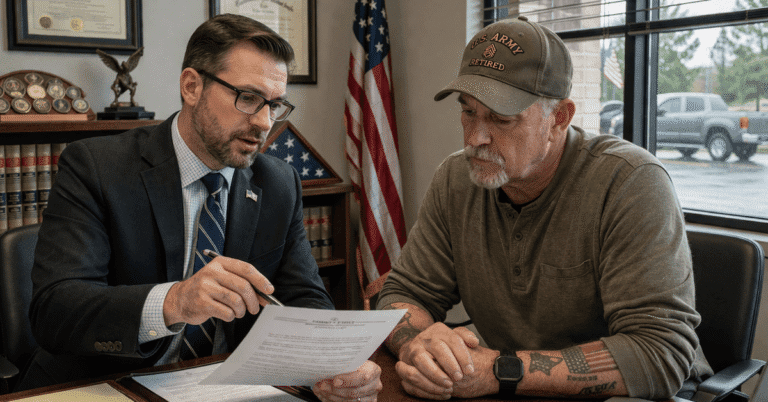
A VA-accredited attorney is a lawyer approved by the Department of Veterans Affairs to help veterans with VA disability claims. Understanding who these attorneys are and how they can help can make a real difference in how you approach your benefits case. The VA system has its own rules, timelines, and procedures, so having the right kind of representation matters.
At VetLaw, our VA-accredited attorneys focus exclusively on VA disability law. We know the VA process can be confusing, and we see many claims denied or rated too low because something was missing or not clearly explained. When we review your case, we look for those gaps and figure out what needs to be fixed so your claim has a better chance of being approved or increased.
What Does “VA-Accredited” Mean?
A VA-accredited attorney is a lawyer who has been officially recognized by the U.S. Department of Veterans Affairs to represent veterans, service members, and their families in VA benefits claims.
This accreditation is not automatic. Attorneys must:
- Apply for accreditation through the VA
- Demonstrate good standing with their state bar
- Complete specific training on VA law and procedures
- Follow ongoing education requirements
Once approved, they are authorized to help you with claims, appeals, and other benefits-related matters before the VA. Without this accreditation, an attorney cannot legally charge fees to assist with most VA disability claims.
Why VA Accreditation Matters
VA law is very different from other areas of law. It is not like personal injury, criminal defense, or even Social Security disability. The rules are unique, and the process can be confusing if you are not familiar with it.
A VA-accredited attorney understands:
- How the VA evaluates disability claims
- What evidence carries the most weight
- How to interpret VA rating decisions
- The appeals process and deadlines
- Common mistakes that lead to denials
At VetLaw, our VA-accredited attorneys work within this system every day. We understand how the VA evaluates disability claims, what kind of evidence actually makes a difference, and how to read between the lines of a VA decision. We also know the deadlines, the appeals process, and the common issues that cause claims to be denied or rated too low.
How a VA-Accredited Attorney Can Help
You are not required to hire an attorney to file a VA claim. However, if your claim is denied, underpaid, or delayed, legal guidance becomes much more important.
A VA-accredited attorney can help you with:
Filing an Initial Claim
If you are just getting started, an attorney can help you build a strong foundation. This includes identifying all eligible conditions, gathering medical evidence, and making sure your application is complete.
Appealing a Denied Claim
Denials are common, but they are not the end of the road. An attorney can review your denial letter, identify what went wrong, and develop a strategy to appeal.
Seeking a Higher Disability Rating
If you believe your condition is rated too low, an attorney can help you pursue an increased rating by presenting additional medical evidence or clarifying how your condition affects your daily life.
Handling Complex Cases
Some claims involve multiple conditions, secondary service connections, or long histories of medical treatment. These cases often benefit from legal guidance to ensure nothing is overlooked.
When Should You Hire a VA-Accredited Attorney?
You might not always need an attorney for a straightforward claim, but there are certain situations where having one can make a significant difference.
You may want to consider working with a VA-accredited attorney if:
- Your claim has been denied more than once
- You received a rating that seems too low
- The VA says there is not enough evidence
- Your condition has worsened over time
- You are dealing with multiple or secondary conditions
- You feel stuck or overwhelmed by the process
In these situations, having someone who understands the system can help you move forward with more confidence.
VA-Accredited Attorney vs. VSO
You may have also heard about Veterans Service Organizations, or VSOs. These are groups that provide free assistance with VA claims.
Both VSOs and VA-accredited attorneys can be helpful, but there are some key differences.
VSOs:
- Offer free help with filing claims
- May have limited time and resources per case
- Typically do not represent you in court
VA-accredited attorneys:
- Can provide more in-depth legal analysis
- Handle complex appeals and legal arguments
- Represent you before the Board of Veterans’ Appeals and higher courts
There is no one-size-fits-all answer. Some veterans start with a VSO and later turn to an attorney if their case becomes more complicated.
How to Verify Accreditation
Before working with any attorney, it is important to confirm that they are actually accredited by the VA.
You can do this by checking the VA’s official Office of General Counsel accreditation database. This ensures the person you are working with is authorized and qualified to handle your claim.
If an attorney cannot provide proof of accreditation, that is a red flag.
Talk to a VA-Accredited Attorney at VetLaw About Your Claim
If you are struggling with a denied claim, a low disability rating, or a complex case, you do not have to handle it on your own. The VA system can be difficult to navigate, especially when your benefits are on the line.
Contact VetLaw today online or at (855) 651-1522 for a FREE case evaluation. We can help you understand your options, strengthen your claim, and take the next step toward the benefits you have earned.
